Pages

Saturday, May 3, 2014

The Psychology of Writing: 5 Ways to make your Characters “Click” with Readers using Vulnerability, Proximity, Resonance, Similarity, and Shared Adversity


At some point in your life, you’ve experienced magic.

It might have appeared as a sudden spark of unexplainable creativity, the lyrics of a deeply moving poem, the chemistry between two individuals meeting for the first time, the notes of a concert, the dedicated synchronization of a routine, the innovative strokes of an artist’s brush…

An overwhelming sense of connection bound you in the moment. You felt inspired, thrilled, advanced, even enlightened. You feel nostalgic each time emotions of this memory are triggered by a sound, a word, an image, a touch, or a smell. The experience of this moment cannot be put any other way: it is pure magic.

As writers, we strive to create this inexplicable magic through words, with the ultimate goal of connecting with our readers. In giving our readers this sensation of “magic,” we instill a feeling of nostalgia within them that they will carry for the rest of their lives.

In this article, I’ll be discussing a unique, psychological-based approach to creating this connection, built on collected research from noted organizational expert and psychologist Ori & Rom Brafman. Read on to learn five ways in which you can make your book and characters “click” with your readers.

1. The Power of Vulnerability
No, that title is not an oxymoron. There is power in vulnerability, specifically as it relates to the way we humans communicate with each other. This same power can be transcribed into your writing as the first step in achieving that magical connection with your readers.

There are two forms of communication—transactional language and connective language. Transactional language ranges from informal speaking rituals (“Hi there. Good morning. How are you?”), to small talk, to discussing things of everyday importance (hobbies, favorite foods, sports team, etc.). Connective language is a much more intimate kind of communication that involves the relating of experiences, thoughts, feelings, and beliefs that are deeply personal to the speaker.

While both types of language are essential in your writing, it is connective language that will create the strongest bonds between your readers and your characters. This is because humans are most likely to respond to an individual’s most personal thoughts (vulnerability) with their own most personal thoughts. When entrusted with another’s private words, humans not only tend to respond in kind but also begin to form a deeper relationship with the individual they are sharing thoughts with. The deeper the exchange of thoughts, the stronger this bond becomes.

One experiment on connective language involved college students responding to a computer’s pre-determined chat questions. Computers using transactional language would ask students simplistic, impersonal questions (“What is your favorite color?” “What classes are you taking now?”), with the experimental question being “Have you ever done anything you are ashamed of?” When faced with this question, almost every student responded vaguely (“Yeah, I guess I have.”) or chose not to answer the question.

However, something interesting occurred in the connective language testing group. In this group, the computer would instead say to the students (paraphrased here), “This computer does not always operate as it should. Sometimes it shuts down before students can save their work and the work is lost. Sometimes it loads programs slowly and cannot connect to the internet. Have you ever done anything you are ashamed of?” Even though the question was the same, the connective language made students empathize with the computer and connect with it on a deeper level. Students began answering the question in very personal ways, listing things they had done to disappoint their parents, harmful addictions, failures at school, and other deep, emotive feelings.

When you write characters, particularly those with whom you want your readers to connect the most, keep in mind the power of vulnerability. The more that your character “tells” the reader (either through thoughts, first-person narrative, or even intimately to other characters) about their personal life, beliefs, values, struggles, and feelings, the more likely the reader is going to empathize and feel attached to this character.

2. Proximity Brings Characters Closer
Study after study has shown that people who live close to each other, sit next to each other in class, and work in the same department are most likely to befriend or “click” with each other (negative factors notwithstanding). This is not due to convenience of proximity, but because of the consistent appearance of the other individual.

A study on this phenomenon selected four women of nearly identical size, weight, and physical attractiveness to attend a regular college course at a local university. One woman attended every day of class, one attended half, one attended only a third, and one attended none at all. The women were instructed to sit at the front of the class and to enter and exit the class without speaking to, or interacting with, any of the other students. At the end of the semester, students were shown pictures of all four women and asked if they recognized them. Most students claimed that they did not remember ever seeing the women (the class had hundreds of students), with the rest of the class claiming that the women looked familiar but they could not place where exactly they had seen them. A survey was then administered to the class, asking students to rate the women on different levels (“How friendly does this woman seem?” “How likely would you be to befriend this woman?”).

The results were astounding. The woman who had attended all of the classes scored the highest in all factors, with each subsequent woman’s attendance rate directly affecting her scores. Even though the students could not mentally recall seeing these women, their subconscious had registered the women’s appearances. The mere fact that one specific woman appeared in class more than the other three (even without her ever speaking to the other students) made students more likely to “like” her and perceive her positively.

Of course, your characters will have certain negative and positive characteristics that will affect your reader’s perception of them. But from the perspective of mere face value, your readers are most likely to feel attached to characters who get the most “page time.” This can especially be seen with minor, background characters. Those that are given the most action and most roles in the story are the ones who the reader will most likely connect with (whether on a positive or negative level). It works for antagonists, too. A villain or minion who is given a larger page count than the others is the one that readers are most likely to revere as a character.

3. Resonance Builds Relationships
Unlike vulnerability and proximity, resonance is a magic that must be cultivated internally before it can be effective externally. The key to resonance is “presence”—the ability to passionately portray something so that others are “caught up” by it.

One of the easiest ways to create resonance through your writing is to simply write passionately. I know that it isn’t always easy to sit in a chair for three hours and beat away at a keyboard, but when you love your topic and your story, that love will seep into your words no matter what. To quote English writer Samuel Johnson, “What is written without effort is in general read without pleasure.” Let your passion for your writing flow through you. Simply enjoy putting words on the page, and this passion will manifest itself to your readers—through your sentence structure, your imagery, even the phonetics of the words you choose. These all blend together to showcase your passion, and if there’s one thing you should know about passion, it’s this: passion is contagious.

A second way to generate resonance on the page is to use your personal experiences to flavor your scenes and characters. If you have been through an accident, a birth, a trauma, a wedding, a battle, or a disease, you are more likely to write about these things with passion. This is also the key to writing nostalgia. Reach back in your mind to sensations and thoughts that carry a nostalgic flavor and put them into words. Nostalgia is one of the more powerful emotions at the writer’s disposal because it creates an inner sense of longing, bliss, and “magic” in the reader.

The third way to create resonance through writing is to dive into your character’s emotions and feelings. When you detail the agonizing pain (or the euphoric happiness) that your character is facing, you force the reader to feel these emotions, too. Studies have shown that when individuals are exposed to images of others in pain, their own brains’ pain sensors are activated (as though they themselves were experiencing the pain). Humans are very empathetic creatures. As writers, we can use this in-born empathy to our advantage when creating emotional attachment and interest in our characters.

4. Similarity: Quantity Trumps Quality
It’s no surprise that we are most interested and apt to favor other people who have things in common with us. Perhaps what is more shocking is that (according to psychology) it’s the quantity of these things, rather than the quality, that counts.

A research team gave a Q&A form to a group of student test subjects. On the form, the subjects answered questions of interest, ranging from “What is your favorite fast food?” to “What is your religion?” After these forms were accepted and processed, the researchers gave a second form to each student, which they claimed was “from another student.” Some of these forms matched the student’s interests 100%, while others agreed on only major issues and others on only minor issues. The students were then asked to evaluate the other person based on the form they received: Were they likely to befriend this person? Was this person cool? Fun? Unique? And so on.

Results showed (not surprisingly), that the forms that matched the individual student’s preferences 100% were most highly regarded. The interesting discovery came when researchers evaluated those forms in which only the student’s major or minor issues were matched. The result revealed that there was no difference. Regardless of how major the issue was (religion, political stance, etc.) or how minor it was (favorite fast food restaurant, eye color, favorite music, etc.), it was the number of things students had in common (and not the quality of them) that determined their favor of the other like-minded “student.”

This is one reason why it’s important to have variety among your characters. In making each character unique, with different flaws, interests, skills, appearances, and fears, you are increasing the odds that you appeal to a specific type of reader in your audience. This is why many writers stress the importance of having a relatable, interesting, and audience-specific main character. In writing for the young adult audience, for example, you will want your main character (and supporting characters) to speak specifically to that demographic. Your main character should have similar struggles, dreams, fears, and thoughts to that of your target audience. This does not mean that your characters can’t have variety outside of your target audience, but it does mean that each character should fill a specific “social role” and speak to a specific part of your readership as a result. Your protagonist should—ideally—speak to your target audience the most.

5. Shared Adversity is the Strongest Bond
There’s a reason why franchises such as The Walking Dead and Attack on Titan have become so popular—these series showcase a struggle against insurmountable odds; even more importantly, they portray shared adversity among an “inner group.” Not surprisingly, this is the fifth and final step in achieving the “click” between your readers and your book of characters.


A shared adversity is any struggle (the badder, the better) that your characters face together as a part of an “inner group.” An inner group is also known as a framed community—a small gathering of individuals whose stance and struggles segregate them from the outside world. This creates an “us VS them” mentality among the group, which draws members of the group closer together, boosting individual vulnerability and proximity, and as a result, resonance and similarity. In The Walking Dead, survivors of the zombie apocalypse (the shared adversity) represent this “inner group.” In Attack on Titan, the inner group is the Survey Corps—an elite rank of soldiers who fight against brutal titans (the shared adversity).

The greater the shared adversity is—the more intimidating and powerful it is—the stronger your bond among the inner group (and between the reader and the characters) will become. Stories of survival thrill the human heart because these stories create a spark—a click, if you would—within the reader. The reader feels the comradeship, the struggle, and the need to belong, and it excites them.

Shared adversity can also be used to connect directly to the reader. For example, if you are targeting a specific demographic—let’s say young adults again—then you could try to choose a shared adversity that would connect with the reader, thus including him or her in the “inner group” with your character(s). You may choose the shared adversity of “fitting in at school” or of “being forever alone,” for example. These can be very effective in pulling your reader into your book and emotionally investing them in your characters. However, simply showcasing an inner group and shared adversity among your fictional cast is often more than enough to do the trick. Remember when I said that passion is contagious? Well, so it a shared struggle when it’s well-portrayed. Readers want to resonate with characters. Give them a good, solid reason to, and you can bet they will.

Tying it Together
Seek ways to make your characters vulnerable. Let readers see their hearts and souls. Let readers know what your characters love and hate and believe—what they live and fight and die for, what they fear, what they feel. Use proximity to your advantage. Give your characters well-proportioned time on the page, especially if they are minor characters you wish to bring out. Showcase your resonance by writing with passion and by using your personal experiences to bring a sense of realism to your characters. Use similarity to your advantage by crafting a unique cast where each character has a social role in appealing to your audience types. Lastly—perhaps most importantly—remember the power of shared adversity among the inner group.

Vulnerability, proximity, resonance, similarity, and shared adversity—it is possible to use any single one of these things in your novel to great effect. But use all of them together and you will have begun to intimately connect—to click—with your reader. And once you have clicked with them, they will never forget the magic your words created in their minds.

For additional research and further reading, check out Sway and Click written by Ori & Rom Brafman.

You may also enjoy:

The Psychology of Writing: 5 Ways to Create Emotional Connection Between Your Readers and Your Characters by Using "Uncontrollable Circumstances"

Friday, April 11, 2014

The Art of Writing: 5 Ways to Grow and Involve Your Fanbase


One of the keys to a marketable novel is its ability to create and maintain a fanbase—a following of fans dedicated to the franchise; often called a “fandom.” Through a fanbase, a novel will grow past its original selling point because it is no longer merely a book—it is a part of an identity statement of thousands of individuals.

You’re probably more familiar with fanbases than you think. Ringers are Lord of the Rings fans who are usually semi-fluent in elvish. Trekkies greet each other with the Vulcan Salute and learn to speak Klingon. Potterheads play on their college Quidditch team and dine on butterbeer and chocolate frogs. Bronies know that they’re “20% cooler” when they give “everypony” in the “herd” a “brohoof.”

These are just a few examples of popular franchises that have experienced enormous growth through their diverse fanbases. Mastering your franchise and gearing it to create a fanbase can greatly increase your novel’s marketability. Here are five simple tips that can assist you in building a dedicated following for your novel or franchise.

Note: For the purposes of this article, I will use the term “fanbase” and “fandom” interchangeably.

1. Attractive Art Style and Characters
When I say attractive, I don’t mean beautiful or handsome. By attractive I mean “eye-grabbing.” The artwork and character design of your franchise should stop the reader’s bookshelf peruse dead in its tracks.

Authors will tell you that the importance of cover art cannot be stressed enough. Readers most often pick up books because something about the cover appeals to them—usually because they find something about the cover attractive. With millions of genre-styled book covers out there, it’s important that you make yours unique enough to “pop out” at your potential audience.

Characters from Lackadaisy. Art by Tracy Butler.
Some authors don’t like putting out “official illustrations” of their characters because they appreciate the reader’s ability to conjure an image on their own. However, establishing what your characters look like can really grow your fanbase—particularly with the YA and juvenile crowd.

If you don’t already have a personal author website, I highly recommend that you establish one. These websites can be a great place to interact with fans, sell your books, announce events, and display your fictional cast. Having biographies of your characters, along with images of what they look like, can boost your fanbase immensely. Some readers are not as visual as others. Some don’t enjoy reading at all and would rather have pictures than words. For these reasons, illustrations of your characters can actually get the more standoffish audience interested in your work. If the characters peak their interest, and the art style is unique enough to grab their attention, then your chances of reaching out to trickier customers increases substantially.

Character design from The Secret of Kells.
For proof of this phenomena, look at novels like The Lord of the Rings, The Hunger Games, and Twilight. For several years, these novels had a large following, but it wasn’t until these books were adapted into films that the fandoms of these franchises really came to the forefront. One reason for this is that movies are more readily advertised than books (we see commercials on TV, hear about it on the radio, see trailers online, watch previews in the theater, and, of course, see a lot of merchandise begin to amass). However, I believe the greater reason is that these novels are finally being given “a face.” Characters are suddenly rendered in a visible form, along with the stories they tell. This is also the reason why television shows, video games, and anime have such large followings. Visuals are simpler. They are easy to grasp. And when these visuals are made widespread across the internet and television, they begin to amass an interest.

A picture is worth 1,000 words. An illustration of an interesting character is going to snatch attention quicker than two paragraphs about said character. Use this to your advantage. Even if you must hire someone to sketch or photoshop images of your characters, your efforts will be well worth it in the end. Much like your novel’s cover, don’t be afraid to spend a little extra on hiring a professional artist to get this job done. Find a unique artistic style that echoes your writing voice and fictional world. Then, find an artist with the special skill to capture this unique style.

2. Create Factions and Draw Parallels
People like to belong. From the beginning of Creation, individuals have sought acceptance and individuality, while at the same time desiring to be a part of something greater than themselves.

Remember the opening paragraph, where I said that fandom is an identity statement? The most popular franchises on the markets use this factor to their advantage by integrating different “factions” into their novels. In Harry Potter, there are different houses of Hogwarts wizardry. In Warriors, there are different cat clans. The Hunger Games, there are different districts. In The Lord of the Rings there are very distinct races of people that inhabit Middle-Earth. In Divergent, individuals are categorized into factions based on their dispositions. In the Percy Jackson series, demi-god children at Camp Halfblood are divided into factions based on their godly heritage. The list goes on and on.
are different cat clans. In

It is from these factions that much of fandom gets its steam. When a series begins to get a fandom following, individuals of that fandom begin to identify with certain factions from the series. For example, a Divergent fan might identify themselves mostly with the Amity (or peaceful) faction; as a result, they might buy shirts or car decals with this emblem. Similarly, Harry Potter fans might purchase and wear scarves that represent one of the houses of Hogwarts in order to show off their dedication and similarity to that particular house.

When you design your novel, keep your readers in mind. Give them something that they can choose to claim as a part of their self-identity. If you can get your reader to think, “Out of the four factions from ________, I am most like this one,” then you have planted the fandom seed.

3. Dare to be Different
Give your novel intelligence. Give it something fresh and real that readers have been longing to read. Dare to reach into the recesses of fresh ideas that others are too afraid to use, lest they fail.

Have you ever seen a really good movie? I mean, a really good movie? One that was so unique and exciting and original that you felt proud just showing it off to your friends and family?

That is what you want to achieve with your novel. Choose a new angle—some fresh twist on an old The Hunger Games—which is now a best-seller and feature film.
topic—or dare to venture where others authors haven’t. Readers will often respect this novelty and your novel will get people talking. If someone had suggested that a young adult novel be written about teenagers killing other teenagers in a gladiator-style area, most would have balked at the thought. But Susan Collins wrote this very book—The Hunger Games—which is now a best-seller and feature film.

In truth, there are very, very few downright bad ideas when it comes to writing novels. Much depends upon what you choose to do with the idea itself. Context and proper usage is everything. Do it right, and you can create a bestseller off of almost any idea.


Remember when I said that people like to belong? Well, people like to be unique too, and there’s a certain sense of pride that comes from reading and recommending a novel that is as unique as they themselves are. Strive to give your readers a piece of themselves in written form. Focus on something that no other novel of your genre has, or take a fresh approach to an old concept. The more involved and outspoken fans tend to view franchises they like as a part of their identity. They appreciate what the franchise stands for, and they like to see themselves reflected within it—through characters, messages, storyline, style, and the intricacy of the world itself. The key is to design a series that individuals will be proud to call a part of their “self-identities.”

4. Leave Some Things Open-Ended
A sign of a growing and flourishing fanbase is when a fanbase begins to post theories about your novel. These theories might come in the form of theorized explanations, educated guesses at the future of the novel, fanfiction, “fanon,” or “headcanons.” This is important because it shows that your fanbase cares enough about your fictional universe to want to “be a part of it.” They love the characters and the world to the point that they hope to see specific outcomes occur (and may even write these themselves via fanfiction and fanon).

Fans who are genuinely “into” your franchise will likely do these things without any kind of encouragement; however, there are some things you can do to prompt fan theorizing:

Don’t detail everything. Let me clarify: bring as much closure to your novel as you feel necessary to satisfy the reader; at the same time, don’t feel the need to detail every single instance of your characters’ lives or of the history of your world. Perhaps you have a character who was involved with a street gang for many years before becoming a law officer. While some details about this character’s past will be crucial to the story, it can be beneficial to leave some things a mystery. Fanbases gravitate towards what is not said in a series, and much fanfiction and fanon is born when you allow fans to theorize about what might have occurred in this particular character’s past. This speculation can serve as a fan-unifier, especially when theories become widely accepted by the fanbase.

Directly Involve your Fandom. Host a fanfiction contest from your official blog or social network. Ask fans to vote on the name of your new character/country/creature. Pose theorizing questions to the fandom, such as “Who should the main character end up with?” or “Who do you think will die at the end of the next book?” Get feedback from them, and respond to it. Fandoms love to be catered to. When you show that you understand the popular fanons and headcanons that your series has generated, the fanbase will respect you even more for it.

Use Social Media to your Advantage. The #1 way that your fandom will spread and grow is through social networks (which I’ll discuss in the next section). Fanons and headcanons will easily develop and gain popularity on the internet, where a single re-blog can go out to millions of other users.

5. Involve Your Fanbase Through Social Networks
The #1 way to grow your fanbase is to involve them through social networks—Facebook, tumblr, Twitter, etc.—and through your personal author website.

Put yourself in your fan’s shoes. Fandoms differ from one to the next. Take a look at yours. What are they most likely to be interested in? What sort of fans does your franchise attract? Why do they care so much about your series? When you approach your franchise from the perspective of the fan, it becomes easier to know what your fans want to see. This does not mean that you should begin to model your series after what your fans want, but rather what is best for them and the series. Supply your fans with things that they expect to see—insider jokes, character antics, style, flair, detailed world building… At the same time, don’t completely shy away from catering to your fans. If a certain character becomes unexpectedly popular, consider giving him/her a special scene in your next novel, for instance.

Respond to your followers. If a fan e-mails you, respond to their e-mail promptly and courteously. Make your response something that they will treasure. When followers comment on your Facebook posts or your personal blog, personally respond to each and every one of them. This not only makes them feel special and respected, it lets them know that they are valued. Whenever you respond to a comment try to offer the fan (1) something that they can respond to and (2) something of related interest. For example:


Ask questions. No matter what you post, ask some kind of question in its midst. This will get your fans talking, which encourages the post to spread around. Don’t forget to respond to what your followers post. They are more likely to share their opinions when they know that their comments are read and acknowledged. They took the time to respond to your question. You should take the time to acknowledge their words.

Character interviews, biographies, and illustrations. I’ve already talked about this in my first point, but let me expand on it a bit more. Characters will make or break your novel. It is important that your readers care about them and like them. When you have a section on your blog or website that lists your cast of characters, along with biographies and illustrations, you are introducing them to your readers in a simple, quick, and efficient manner. You may also want to include things like character interviews, which can give your readers an idea of how your character talks, what they believe and enjoy, and also a few tasty tidbits about his/her role in the story.

Interactive activities. Get creative with ways to engage your fans while spreading interest in your series. Create a personality quiz, for example, where fans can figure out which character they are most like. Or create a quiz that challenges how much your fans know about your series. Those who are more versed in programming may want to create flashgames themed around their series. Those with designing capabilities should consider creating wallpapers, avatars, and signatures for fans to use on their computers, in forums, and on their social networks. The possibilities are endless. Be creative.

Develop a lingo. This is optional, but it can help to emphasize the identity of the fandom. Creating a lingo—or a set of terms geared towards the fanbase—can define your series as a fandom. Defining a term for the overall fandom is often the first step. Twilight fans are Twihards. Dr. Who fans are Whovians. My Little Pony fans are Bronies or Pegasisters. This overall term is what helps define a fandom, and under this term are many others used within the fan community. These terms are especially wide-spread online where social networks link fans with one another. Much like fanon and headcanon, lingo within the fanbase of a particular series often develops on its own.

Add Something!
How do you like to keep your fanbase thriving? If you have tips, be sure to share them!

Friday, March 28, 2014

5 Lessons Kingdom Hearts Has Taught Me


Author's Note: Seeing as today is the anniversary of Kingdom Hearts, I decided I would share an award-winning article I wrote a couple years ago about the ways that this series has effected me as an individual. This article has been featured on KHInsider.com and won 1st place in a non-fiction writing contest on KH-vids.net. 

As this is an all-encompassing article, beware of **major spoilers** for 358/2 Days and Birth by Sleep, as well as some minor spoilers for Dream Drop Distance and other Kingdom Hearts games.
_______________________________________________  

There’s a special something about Kingdom Hearts. For years I’ve tried to put my finger on the definition of this something, but I’ve never come up with a satisfying answer. One thing I know for sure is that—personally—no other video game franchise has been so influential and thought-provoking as this one. A deceptive depth underlies its simplistic, Disney-esque feel. Its characters have grown on me—and almost grown up with me—to the point where I regard them as “old friends.” The lessons I’ve learned from this franchise as a whole can’t all be listed here, but I’d like to highlight some of them, none-the-less. They have touched my life and influenced my convictions, and for that I believe they deserve recognition.

Lesson 1: Even Nobodys are Somebodys
I want to highlight Xion in particular for this point. Xion’s story is easily the most heart-breaking in the franchise. She comes into existence as nothing more than a tool to further the Organization’s schemes. In the most literal sense of the word, Xion is a true “nobody”—a being who never really existed at all—just a physical embodiment of Sora’s memories.

And yet  Xion makes an impact on those closest to her—Roxas and Axel. These three form an unbreakable friendship—so strong, in fact, that Xion is willing to sacrifice her existence in order to see it protected.

Roxas, Xion, and Axel share a peaceful moment before the storm.
One of the most misunderstood scenes in 368/2 Days shows Roxas cradling a dying Xion. Just before her death, Roxas gasps out, “No! Xion… who else will I have icecream with?” Fans often joke about the naivety of this line, not realizing just how powerful it is. Xion has made such an impression on Roxas that, without her, Roxas can see only an empty hole in his life. Those simple memories of sharing icecream together on the clocktower have become more important to Roxas than anything else—his accomplishments, his standing in the Organization, even the truth about his existence. After all, it was Xion that encouraged him to find the truth behind his unanswered questions. With her death, that encouragement has also ceased to exist.

And yet, even whilst dormant in Roxas’ memories, Xion still manages to influence him. During Roxas’ final battle with Riku, Xion telepathically interacts with both combatants, ultimately setting her friend on a path to rejoining Sora and discovering his ultimate purpose. In the end, Xion lives on—in the heart of Roxas, which is truly the heart of Sora. Her influence helps to shape Roxas and grow him as a person. In this way, Xion is far more than a collection of embodied memories. She had more “heart” than most of the Organization. Her memory will forever linger in the mind of the one person that was closest to her.

All that to say this: I find Xion highly inspirational. She stands out from the cast because she proves a powerful point—that everybody has a purpose… even if it seems that that individual was “never meant to be” or “never should have been.” Without Xion, Roxas would have probably never struck out on his destiny to rejoin Sora, and Axel may have developed in a dramatically different light—one that did not expand his heart and emotions quite so much.

Lesson 2: Your Past is not Your Future
Riku wearing a blindfold to keep his Darkness at bay.
From the moment that Riku discovers the Darkness, he sets himself on a shadowy path to redemption. He stumbles between the Light that is his friends and the Darkness that lies buried in his heart. His personal journey is filled with self-regret, anger, and mistakes, and yet Riku never lets himself give up on reestablishing himself as a true friend to Sora and Kairi.

Looking at the latest installment in the series, Dream Drop Distance, it’s incredible to see Riku’s unwavering dedication to his friends—especially near the end, in which he takes up the Keyblade and goes to Sora’s aid. Looking at Riku’s early years, in which he openly humiliated, and even turned his Keyblade against, Sora, it’s difficult to believe that he’s even the same character.

It’s obvious that Riku has regrets about tampering with the Darkness, but he accepts his past and moves on. By the end of the Mark of Mastery exam, Riku realizes that his future doesn’t have to reflect his past. Does he still struggle with Darkness? Of course. Xehanort’s Heartless seems to haunt his every step, and yet Riku acknowledges this as his personal demon and grows stronger each time he does battle with it. His heart eventually becomes so powerful that when Xehanort’s Heartless approaches him for the final time, Riku is able to ward him off, simply by raising his Keyblade. In the end, his mistakes and his painful road to redemption give him a quiet strength that even Sora cannot understand, having never gone through the same experiences.
 
Riku shielding Sora from Xemnas' Ethereal Blades.
Riku is my favorite character for this very reason—he is relatable. I’m sure that, like me, a lot of fans look to him as a beacon of hope—that no matter the opposition, it can be overcome; no matter what the past holds, it does not have to dictate the future. Each day is a new opportunity to set things right. Each opportunity is a challenge to grow. Each growing pain makes you stronger as an individual.

Lesson 3: Trust Until Given Reason to Doubt
Sora’s name has all but become synonymous with naivety, and yet a closer inspection of his seemingly reckless behavior reveals something much deeper beneath the surface: trust. No matter who Sora encounters—whether it be angsty Neku or imperiled Alice—his automatic response is always either: “Can I help?” or “Let’s be friends!” Sometimes it’s both. In the same mouthful.

Sora reaches out to Namine.
This default trust is shocking, especially when you consider the amount of deception that Sora has encountered in his lifetime. In Kingdom Hearts, Riku—his best friend—betrays and fights against him. In Chain of Memories, Sora learns that Namine has been deceiving him all along, and yet he still chooses to protect her at the risk of his memory being lost. Unlike Roxas, who experienced similar deceptions his entire life, Sora never loses his faith in others. I believe that the answer to this miraculous trust lies in the fact that Sora holds deep-rooted friendships with those that he meets. He stands on a belief that a true friend is someone that you can trust unconditionally—and accept unconditionally. In that light, Sora finds it easy to trust and even easier to forgive a fault.

It is because of characters like Sora that I’ve begun to give others more trust and more benefit of the doubt. I hold a faith in my friends that says, “I trust you because you’ve never given me reason to doubt.” But, like Sora, I also understand that we are all imperfect human-beings. Forgiveness is a necessary ingredient, and it is certainly the fastest way to mend a broken or strained relationship.

4. Love is the Strongest Weapon of All
Sora embodies trust, optimism, and the importance of forgiveness.
Kingdom Hearts is full of love, although if you’re searching for it in a romantic sense, you’ll be looking in all the wrong places. Let me clear up my definition of love in order to explain this point. By my definition of love, I mean a selfless, unconditional, accepting love—not a boyfriend/girlfriend romancey-kind-of love. In Kingdom Hearts, this kind of love fills the game. When Sora proclaims that, “I don’t need a weapon. My friends are my power!” he’s speaking of this unbreakable bond of love that he shares with them. Sora realizes, long before any other character does, that the power of love is stronger than the Keyblade itself. Through his concern—his love—for his friends, Sora is able to heal the mental and emotional wounds of many characters, and even aid in the redemption of Axel and Riku. Though a mighty weapon, the Keyblade could never perform such acts.

The power of love presents itself in the father/son relationship that exists between Terra and Master Eraqus in Birth by Sleep. Although we are told little about either characters’ pasts, it is quite clear that Terra views the Master as his own father, even going so far as to call him such during his final battle with Xehanort. Perhaps Terra was an orphan, brought in—like Ventus—to Eraqus’ care when he was young. Whatever the terms of their first meeting, the results were magnetic.

Eraqus fades into the Light after a mortal injury.
Unfortunately, Eraqus suffered from excessive worry and lack of trust, having been betrayed by his friend Xehanort in the past. This fear leads to his strict aversion of Darkness and an almost scrutinizing surveillance of Terra the moment that his pupil shows outer signs of his inner Darkness.  Though his love for Terra never comes into question, Eraqus’ fears eventually lead to a severe misunderstanding and a deadly Keyblade battle with Terra, in which Eraqus is mortally wounded. As the Master’s life fades away, a strange phenomenon occurs. Both Terra and Eraqus simultaneously come to terms with each other, recognizing their personal faults and silently asking the others’ forgiveness.

After Terra’s own demise at the hands of Xehanort, his heart proves stronger than the evil one thought possible. It soon becomes apparent that someone new is residing in the former pupil’s heart—Master Eraqus. Even in death—even in the face of personal failure—Terra and Eraqus never lose the love that they have for each other. It is this act of love that gives Terra the strength to face years of helplessness, imprisoned in the confines of Xehanort’s dark existence.

Terra considered Eraqus his father. Artwork by Yobe Ninda.
“I'm not afraid of what the darkness holds now. Even if you do wrest control of my heart from me--even if you cast me into the deepest, darkest abyss--you'll never sway me from the one cause that pushes me to keep on fighting. Whatever the cost, I'm ready to pay it.”

With those words—and only the spirit of his beloved Master to guide him—Terra prepares for the battle ahead. He knows that he can win. The power of love has shown him that.

I am a strong believer in “overcoming evil with good” through the power of love, and Kingdom Hearts has served to reinforce this theory in my mind. No matter the fault and no matter the wound, love cures and makes right. Even the most wicked evils do not stand a chance in the face of it.

Lesson 5: We Are All a Part of Each Other
I thought it would be appropriate to close with this point, as it is one of the strongest underlying themes of the series: we are all a part of each other, and together we form something greater. “The three of us will always be one,” says Aqua, and even when she, Ventus, and Terra, are separated by death, Darkness, and deception, they never lose sight of this belief.

Wayfinders symbolize the eternal connection of friendship in Birth by Sleep.
Sora sums it up in a climatic pre-battle speech with his best friend Riku: “Although my heart may be weak, it’s not alone. It’s grown with each new experience, and it’s found a home with all the friends I’ve made. I’ve become a part of their heart just as they’ve become a part of mine. And if they think of me now and then… If they don’t forget me… Then our hearts will be one.”

This network of friends—linked through the power of love—leads to one individual sharing hearts with many others. In this way, nobody is an island unto themselves. With each contact made, a piece of one individual forever connects with another—influencing him, healing him, or harming him. When hearts grow strong, they form legacies, and those legacies keep friends and memories eternally alive. Lea had a thing or two to say about this topic in Birth by Sleep, “I want everybody I meet to remember me. Inside people's memories, I can live forever.”

In almost every Kingdom Hearts game, the main characters become separated from each other—forcefully or otherwise—for an extended period of time. Yet, throughout this separation, they never forget that they are together in spirit. Sora first realizes this after his reunion with Kairi, “I looked everywhere for you, but you were with me all along,” he says.

Seasalt Icecream is a symbol of friendship in 358/2 Days.
For me, this has served as a reminder to influence carefully. With each contact I make, I am—in some way—shaping each person I meet, and I want to shape them (or become a part of them) in only a positive way. Understanding this concept brings a huge responsibility into focus. I can say with certainty that Kingdom Hearts has given me a lot to chew on in this particular area.

More importantly though, I have been reminded that I’m never truly alone. I have people and friends who I have impressed and been impressed upon… People who care about me and want the best for me. People that I can open my heart to, or simply sit on a clocktower and eat some seasalt icecream alongside. It’s a good feeling, and it’s truly comforting to know that you’ve made a difference in someone’s life, just because you were in it.

Closing
I feel like I could expand this list forever. Kingdom Hearts has been a major part of my inner influence map, and its prominence only grows with each new installment to the series. I owe this franchise for a lot of things—expanding my creativity, getting me into Disney, introducing me to an amazing story filled with vibrant characters…

…But most of all, perhaps, I owe Kingdom Hearts for simply being a part of my life. It’s taught me lessons about friendship, purpose, destiny, and love that I will never forget.

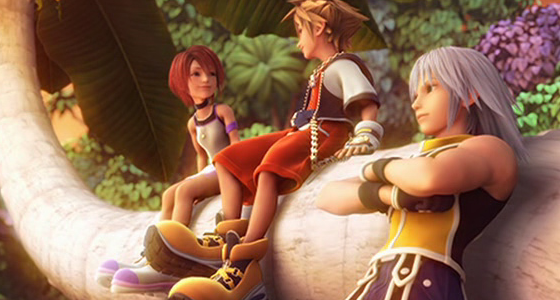
The Destiny Islands trio watch the sun set as they dream about their futures.

Friday, March 14, 2014

Book Review: Precisely Terminated


In her first-ever novel, Amanda Davis tells the story of a dystopian future wrought with manipulation, danger, and helplessness. Even so, hope has an interesting role to play as well—through many sacrificial and kind-hearted characters—which sets this tale apart from most others in its genre.

The fictional world of Cantral is inhabited by various classes of people, all of which have been implanted with small microchips. These chips force obedience from their hosts, or cause their deaths if certain tasks and rules are not followed completely. As the only one in Cantral without a chip, Monica is the world’s one hope of freedom from these deadly devices and the supercomputers that govern them.

All-in-all, the world system in Precisely Terminated runs well with the story. As this dystopian tale keeps otherwise-complex subjects relatively simple, it’s a great entry novel for adults and teens alike who have never read the genre. Monica’s goals are instantly clear, and the workings of Cantral are easy to grasp and equally plausible. Some readers may feel a bit empty for answers by the end, as the novel doesn’t say much about how the world came to be in its current condition, but I have confidence that—with two books to go in the series—there’s still a lot of ground left to cover.

As a Christian author, Amanda Davis keeps her novels free of language, sex, and other blights that plague a majority of the secular YA shelf. Parents and readers should note that a sort of despair hangs over portions of the book, however, and that there are a few instances of violence that may give younger readers pause. For example, one character loses part of a finger to a whirling blade. It is also discussed that—in order to get one of Monica’s earliest chips—a council member had used a fan to slice open the skull of a dead girl. This mature content makes Precisely Terminated an excellent read for teens, though some of younger readers may be bothered by the few instances of graphic violence.

Though there are few references to Christianity at the start of the novel, by the end these things start to seep in. Between an entry in a character’s diary and a not-so-subtle hint from the author in the acknowledgements, it’s clear that Amanda plans to slowly pour more and more Christian allusion into her trilogy. I expect the second novel, Nobel Imposter, will contain even more.

A relatively small cast keeps this tale of light in darkness quite simple. The central characters are delightfully flawed and relatable, and I look forward to seeing new additions introduced to the core group. Through clever and creative devices, Amanda gives Precisely Terminated an interesting, but adrenaline-laced, edge. Most importantly, this is one dystopian novel that doesn’t leave readers in the depths of helplessness. Hope acts as a silent vigilant throughout the story, and by its end, the dawn of freedom begins to break over the horizon of despair.

I wish my best to Amanda and her journey as an author. She has succeeded in producing an eye-catching tale of courage, sacrifice, and faith. If you’re looking for a clean, exciting new trilogy to sit alongside your Chronicles of Narnia, Dragons in our Midst, and Sword of the Dragon series, then go pick up Precisely Terminated. It’s a great way to enter the dystopian genre without wading through all of the depressing, godless muck.

In the mean time, I think I’ll pick up Noble Imposter and see what trouble Monica lands herself in next…